
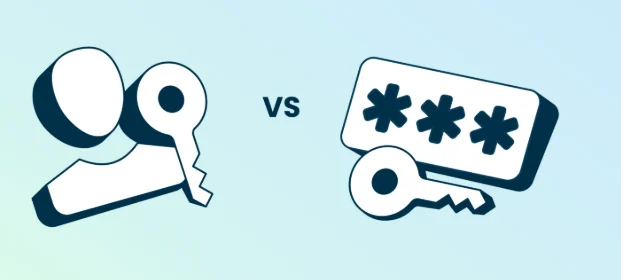

डिजिटल आयडेंटिटी लँडस्केप व्यावसायिक इंटरनेटच्या प्रारंभापासून त्याच्या सर्वात गहन संरचनात्मक बदलातून जात आहे. For more than six decades, the foundational mechanism protecting global digital assets has been a shared-secret model: the traditional string of characters known as a password. However, as cybercrime infrastructure scales via automated credential-stuffing bots, advanced generative phishing frameworks, and sophisticated social engineering schemes, the systemic vulnerabilities of memory-based authentication have become an acute liability for enterprises and retail consumers alike. To counter these systemic threats, a global security coalition spearheaded by the FIDO Alliance and the World Wide Web Consortium (W3C) has deployed WebAuthn credential pipelines. This architectural battle, framed as passkeys vs passwords, marks a transition from a world of shared secrets to a resilient model of asymmetric cryptography.
आव्हान-प्रतिसाद प्रमाणीकरण प्रवाह
तांत्रिक आणि सुरक्षा वैशिष्ट्य मॅट्रिक्स
| लेगसी पासवर्ड ऑथेंटिकेशन | FIDO2 / WebAuthn पासकी सिस्टम्स | |
| सममितीय ज्ञान (सामायिक स्ट्रिंग) | असममित क्रिप्टोग्राफी (ECC कीपेअर) | |
| फिशिंग प्रतिरोध प्रोफाइल | असुरक्षित (सहजपणे प्रॉक्सी-इंटरसेप्ट केलेले) | अंतर्निहित प्रतिकारशक्ती (डोमेन-बाउंड की) |
| उच्च (मानवी स्मृती मर्यादांद्वारे चालवलेले) | शून्य (प्रत्येक डोमेनसाठी स्वयं-व्युत्पन्न केलेल्या अद्वितीय की) | |
| गंभीर (ऑफलाइन क्रॅकमध्ये हॅश शीट उघड करते) | शून्य प्रभाव (सार्वजनिक कीजमध्ये चोरीचे मूल्य नसते) | |
| मल्टी-फॅक्टर आर्किटेक्चर | वेगळे दुय्यम स्तर आवश्यक आहेत (SMS, TOTP) | अंगभूत MFA (ताबा + अंतर्निहित बायोमेट्रिक) |
| ~12–15 सेकंद (मॅन्युअल एंट्री + MFA) | ~3–5 सेकंद (सिंगल बायोमेट्रिक जेश्चर) |
. When a passkey is initially generated, the client device tightly binds the public-private key pair to the explicit Fully Qualified Domain Name (FQDN) of the active website (eg, .
समक्रमित पासकीज (ग्राहक श्रेणी)

Comments are closed.